Type something to search...
peoplespeoplespeoples
Serving US Businesses

AI Tools Built for Your Business — Not Everyone Else's

Harlax Enterprises crafts custom AI solutions that save your team real time. We serve small to mid-size US firms with targeted process optimisation — free assessment, no obligation.

banner image

Tell us about your workflow challenge

We'll assess your process for free and identify where AI can save you the most time.

banner image
banner image
banner image
badge Our Services

Three ways Harlax Enterprises works with you

Whether you need a custom solution, want to explore our independent tools, or have a business idea you’d like to build — we have a path for you.

Custom AI Solutions for Your Business

We start with a free assessment of your workflow to find where AI can save your team the most time. Then we prepare a detailed quote with expected impact — and build the solution milestone by milestone so your cash flow stays in sync.

check
Free workflow assessment — no commitment
check
Quote with clear ROI projections
check
Milestone-based payments tied to delivery
Custom AI Solutions for Your Business
How it works

From first conversation to live solution

“We make it simple to get started — and keep you in control every step of the way.”

“Free Workflow Assessment”

“Tell us about the repetitive or time-consuming processes in your business. Our team meets with you to understand your workflow and identify the highest-impact opportunities for AI optimisation.”

check
No cost, no obligation.
check
Deep-dive into your current process.
“Free Workflow Assessment”

“Receive a Detailed Quote”

“We prepare a clear quote covering the scope of work, project milestones, timeline, and expected impact — so you know exactly what you're getting before any commitment.”

check
Transparent scope and pricing.
check
Projected time and cost savings included.
“Receive a Detailed Quote”

“Milestone-Based Development”

“Once you approve the quote, we build in structured milestones. You pay as we deliver — keeping cash flow in sync with progress. No large upfront costs.”

check
Pay only as milestones are completed.
check
Regular updates and full visibility.
“Milestone-Based Development”

“Project Closed, Value Realised”

“The project wraps up once all agreed deliverables are complete and verified. Your team has a working AI tool, proper handover documentation, and the efficiency gains start immediately.”

check
Clean handover and full documentation.
check
Ongoing support available post-delivery.
“Project Closed, Value Realised”
badge Our Impact

Built to save your team real time.

Hours Reclaimed Weekly

Hours Reclaimed Weekly

Our clients recover meaningful hours every week by automating manual, repetitive tasks with targeted AI tools.

Focused on Small & Mid-Size

Focused on Small & Mid-Size

We don't serve enterprise giants — we focus entirely on small to mid-size US firms where every hour and dollar counts.

Milestone-Guaranteed Delivery

Milestone-Guaranteed Delivery

Every project is broken into milestones. You see progress before you pay — your cash flow stays protected throughout.

badgePricing

Pricing Built Around Your Project

Every business is different — so is every solution. We scope your project, assess the impact, and send you a tailored quote. No standard tiers. No guesswork.

All pricing is customised to your project. Request a free assessment to get your quote.

Custom Solution

Project-based

A fully tailored AI tool built for your specific workflow challenge. Scoped, quoted, and delivered milestone by milestone.


Features Included:
  • Free workflow assessment included
  • Detailed scope and impact quote
  • Milestone-based payment schedule
  • Full handover and documentation
  • Post-delivery support available

Co-Founder Partnership

Equity partnership

Bring your idea and we'll build it together. We act as your tech co-founder — from feasibility to launch — with shared ownership.


Features Included:
  • Problem analysis and feasibility study
  • Full product development
  • Shared equity / profit model
  • Go-to-market strategy support
  • Ongoing technical partnership

HL Tools Access

Tool licence

Access our independently developed AI tools designed to solve common small business challenges — ready to deploy.


Features Included:
  • Purpose-built for small & mid-size firms
  • No heavy setup or integration effort
  • Regular updates and improvements
  • Dedicated support included
  • Scalable as your team grows
badge Testimonials

What our clients say

Real results from real businesses. Here is how Harlax Enterprises helped our clients reclaim time, cut costs, and move faster.

Before working with Harlax Enterprises, my team was spending nearly two hours every day manually pulling data from different systems to compile our weekly report. Harlax built us a custom tool that now does it in under three minutes. That is time we have redirected entirely to client work. The free assessment was genuinely useful — they identified problems we had not even thought to flag.

Anant Vashisth

Operations Manager
I brought Harlax Enterprises an idea I had been sitting on for months but could not build alone. They came in as a real co-founder — not just a dev shop. They challenged my assumptions, helped me sharpen the concept, and then built it properly. The milestone payment model meant I was never paying ahead of progress. Six months in, we are live and already profitable.

Waquar Ansari

Founder & CEO
Our support team was drowning in repetitive customer queries that were eating up hours each day. Harlax built an AI tool that now handles the bulk of our first-response emails automatically. Response times dropped from hours to minutes, and the team finally has bandwidth for complex cases that actually need human attention. Real impact, not just a demo.

James Arrington

Director of Customer Success
badge How it works

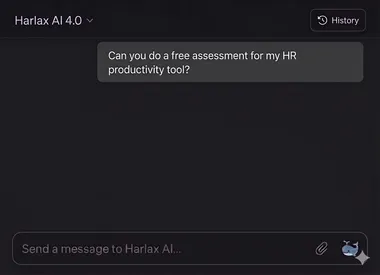
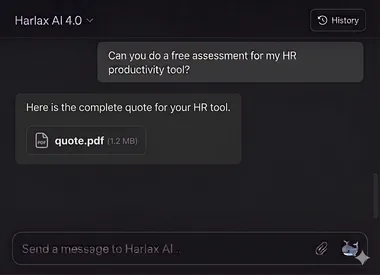
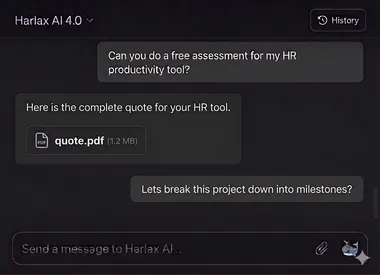
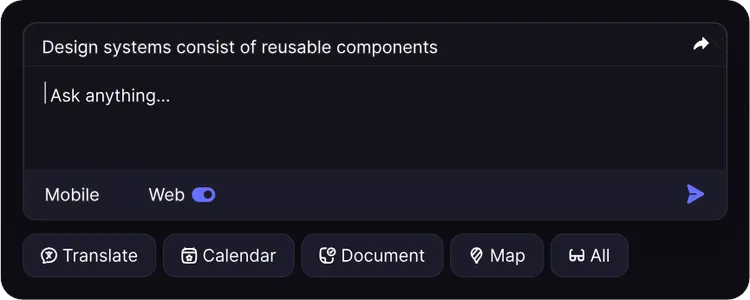
How our AI chat works in 3 simple steps

Stay updated with our latest blog posts and insights.

Why Milestone-Based Projects Work Better Than Fixed-Scope Contracts

Why Milestone-Based Projects Work Better Than Fixed-Scope Contracts

The problem with fixed-scope contracts The traditional model for technology projects goes something like this: a client specifies exactly what they want, a vendor quotes a fixed price, a contract is signed, and work begins. On paper it sounds clean. In practice, it’s one of the most reliable ways to end up with a result that satisfies nobody. The reason is simple: at the start of a project, the client doesn’t yet know everything they’ll learn during the process, and the vendor doesn’t yet understand everything about the client’s real needs. A fixed-scope contract locks in decisions made with the least possible information, and then penalises both sides for changing their minds as better information emerges. How milestone-based delivery works differently In a milestone structure, the project is broken into discrete stages — each with a defined deliverable, a review point, and a payment. Work proceeds milestone by milestone, with each phase informing the next. This has several practical advantages: You see progress before you pay — Payment is tied to delivery of something tangible. You don’t pay for work that hasn’t been done, and you can evaluate each stage before committing to the next. Scope can evolve sensibly — If a discovery phase reveals that the original approach needs adjustment, the project adapts. You’re not locked into executing a plan that’s already been shown to be suboptimal. Risk is distributed — Neither side is exposed to the full project risk upfront. The client isn’t funding months of work before seeing anything. The vendor isn’t absorbing scope creep that erodes the economics of a fixed-price quote. Momentum is maintained — Clear milestones create natural checkpoints that keep both sides focused and accountable. There’s no ambiguity about what’s been delivered and what comes next. What makes a good milestone structure Not all milestones are created equal. Good milestones are defined by outputs, not activities. "Deliver a working prototype that handles X and Y" is a milestone. "Spend two weeks on development" is not. The difference is that the first is objectively verifiable — either it does X and Y or it doesn’t. Milestones should also be sized appropriately. Too small and you create administrative overhead. Too large and the feedback loop slows down. For most AI tool projects, three to five milestones covers the full arc from discovery through to delivery. Why we built our model this way At Harlax Enterprises, every project runs on this structure. We present a milestone plan alongside the quote so clients know exactly what they’re approving at each stage and what they’ll receive in return. It’s the model we’d want if we were the client — and that’s the test we apply to everything we do.

Kristin Watson
18 Jun, 2025
Five Workflow Problems Small Businesses Should Stop Solving Manually

Five Workflow Problems Small Businesses Should Stop Solving Manually

The manual work hiding in plain sight Every business has them — processes that everyone knows are inefficient, that feel like they should have been fixed years ago, but somehow never get prioritised. They become part of the routine, invisible through familiarity. These are exactly the processes where AI delivers the fastest and most satisfying returns. Here are five that come up repeatedly across the small and mid-size businesses we work with. 1. Report generation Whether it’s weekly sales summaries, operational dashboards, or client-facing performance reports, report generation follows the same pattern in most businesses: someone manually pulls data from multiple sources, pastes it into a template, applies formatting, and sends it out. This can take anywhere from one to four hours per cycle. AI can automate the entire pipeline — pulling, formatting, and distributing reports on a schedule — reducing a multi-hour task to a few minutes of review. 2. First-response customer communication The first response to an inbound enquiry is almost always templated. The same questions get asked over and over: pricing, availability, process, timelines. Yet most businesses still have a person handling each one individually. An AI-powered response tool can handle the majority of first-contact messages automatically, routing anything genuinely complex to a human. Response time drops from hours to seconds, and your team’s attention goes where it’s actually needed. 3. Data entry and system synchronisation CRMs, accounting tools, project management platforms, and spreadsheets — most businesses run on multiple systems that don’t talk to each other. The result is a constant background hum of manual data entry: copying a contact from an email into a CRM, updating a spreadsheet from an invoice, transferring job details between systems. Custom integrations and AI-assisted data pipelines eliminate this entirely. The data moves automatically, and your team stops being the connector. 4. Scheduling and follow-up coordination Booking meetings, chasing responses, sending reminders, confirming attendance — the administrative overhead of scheduling is disproportionate to its importance. It’s a task that requires no real judgment but consumes significant time when multiplied across a busy team. AI scheduling tools can handle the back-and-forth autonomously, freeing the humans involved for the meeting itself rather than the logistics around it. 5. Document processing and extraction Invoices, contracts, applications, forms — businesses receive documents that need to be read, interpreted, and acted on. Doing this manually is slow and error-prone. AI document processing tools can extract the relevant information, categorise it, and route it to the right place automatically. The common thread What all five of these have in common is that they’re high-frequency, rule-based, and currently dependent on human time for no good reason. If any of them sound familiar, they’re worth a closer look. A single well-built automation in any of these areas can return hundreds of hours per year.

Ethan Williams
12 May, 2025
From Idea to Product — What the Co-Founder Model Really Means

From Idea to Product — What the Co-Founder Model Really Means

The gap most entrepreneurs fall into Most people with a strong business idea reach a familiar roadblock: they know exactly what they want to build, they understand the market, they’ve validated the concept — but they don’t have the technical capability to bring it to life. Hiring a development agency feels risky and expensive. Finding a technical co-founder from scratch can take years. This is the gap the co-founder model is designed to fill. What a co-founder partnership actually involves A co-founder relationship is fundamentally different from hiring a contractor or agency. An agency delivers what you specify and moves on. A co-founder is invested in the outcome. That changes everything about how the work gets done. In practice, it means we don’t just take a brief and build to spec. We challenge assumptions, ask hard questions about the business model, and bring our own perspective on what will and won’t work technically. If your idea has a flaw, we’ll find it early — before it’s been built and funded. The engagement typically covers four phases: Problem analysis — Understanding the real problem your product is solving, who experiences it, and how severe it is. Many ideas are solutions in search of a problem. This phase tests whether yours is genuinely needed. Feasibility assessment — Determining whether the idea can be built at a cost that makes commercial sense. Some ideas are technically possible but prohibitively expensive to build properly. Others are simpler to build than they appear. Knowing which category you’re in is critical before committing. Product development — The actual build, structured in milestones so progress is visible and investment is tied to delivery. Go-to-market support — Helping position the product and think through the initial launch strategy, because a well-built product that nobody finds is still a failure. How profit sharing works The profit arrangement is agreed upfront and varies depending on the nature and scale of the contribution. It’s always a documented agreement, not a handshake — both parties need clarity on what they’re building toward and what each side receives. This model works best when the entrepreneur brings genuine domain expertise and market insight, and Harlax Enterprises brings the technical execution. The combination is stronger than either side alone. Is it right for your idea? The co-founder model is best suited to ideas that are technically non-trivial, have a clear commercial path, and require ongoing technical involvement beyond an initial build. If your idea is simple enough to build with existing no-code tools, that’s probably the more efficient route. If it needs custom AI, complex integrations, or purpose-built software, a co-founder partnership is worth a conversation. We offer a no-obligation initial discussion to assess fit — for your idea and for ours.

Liam Anderson
05 Apr, 2025
View All Blogs
badge FAQ

Frequently Asked Questions

Have questions about working with Harlax Enterprises? Here are the answers to what we hear most.

Have more questions? Talk to our team

product image product image

Stop losing hours to tasks AI can handle.

Book a free workflow assessment with our team. We will identify your biggest time-drains and show you exactly how we can fix them — at no cost, no commitment.

Book Free Assessment